How to Know if My Baby Has Meningitis
Meningitis is a condition that causes inflammation in the meninges, which protect the brain and spinal cord. Meningitis is most ofttimes acquired past a virus or bacteria.
Meningitis is an uncommon just potentially dangerous infection. Babies under ii months of age are at greater risk of getting meningitis, co-ordinate to the American Academy of Pediatrics (AAP).
Experts are not sure why some babies get meningitis, only they believe it could be related to their immature immune systems.
Meningitis can have lasting furnishings on babies and can be fatal in some cases. However, prompt medical handling can significantly reduce the risk of serious complications.

The symptoms of meningitis in babies may non be alarming at commencement. Some babies may just appear irritable or tired.
Meningitis can become serious quickly, so it is essential to exist aware of its symptoms and to seek medical care immediately if meningitis is suspected.
The nearly common symptoms of meningitis in babies include:
- Bulging fontanel (the soft spot on top of the head). This may exist due to increased pressure or fluid in the brain.
- Fever. A high temperature is a red flag for an infection, only some babies, especially those under three months of age, may non have a fever.
- Cold hands and feet with a warm torso.
- Chills. This may include shivering or chills, with or without a fever.
- A stiff neck. Babies may hold their bodies in a stiff position and may concur their caput tilted back.
- Irritability and crying, especially when picked up. This could be due to a sore or stiff neck or muscle and body aches.
- Rapid breathing.
- Airsickness persistently.
- Refusing to feed.
- Extreme sleepiness. A person may have difficulty with or exist unable to wake the baby.
- Ruby or night rash or marks on the trunk. If a babe has a fever, appears sick, and develops a rash, seek medical care right away.
Babies that have any symptoms that could be meningitis should become emergency medical care. Prompt and aggressive treatment helps ensure a better event.
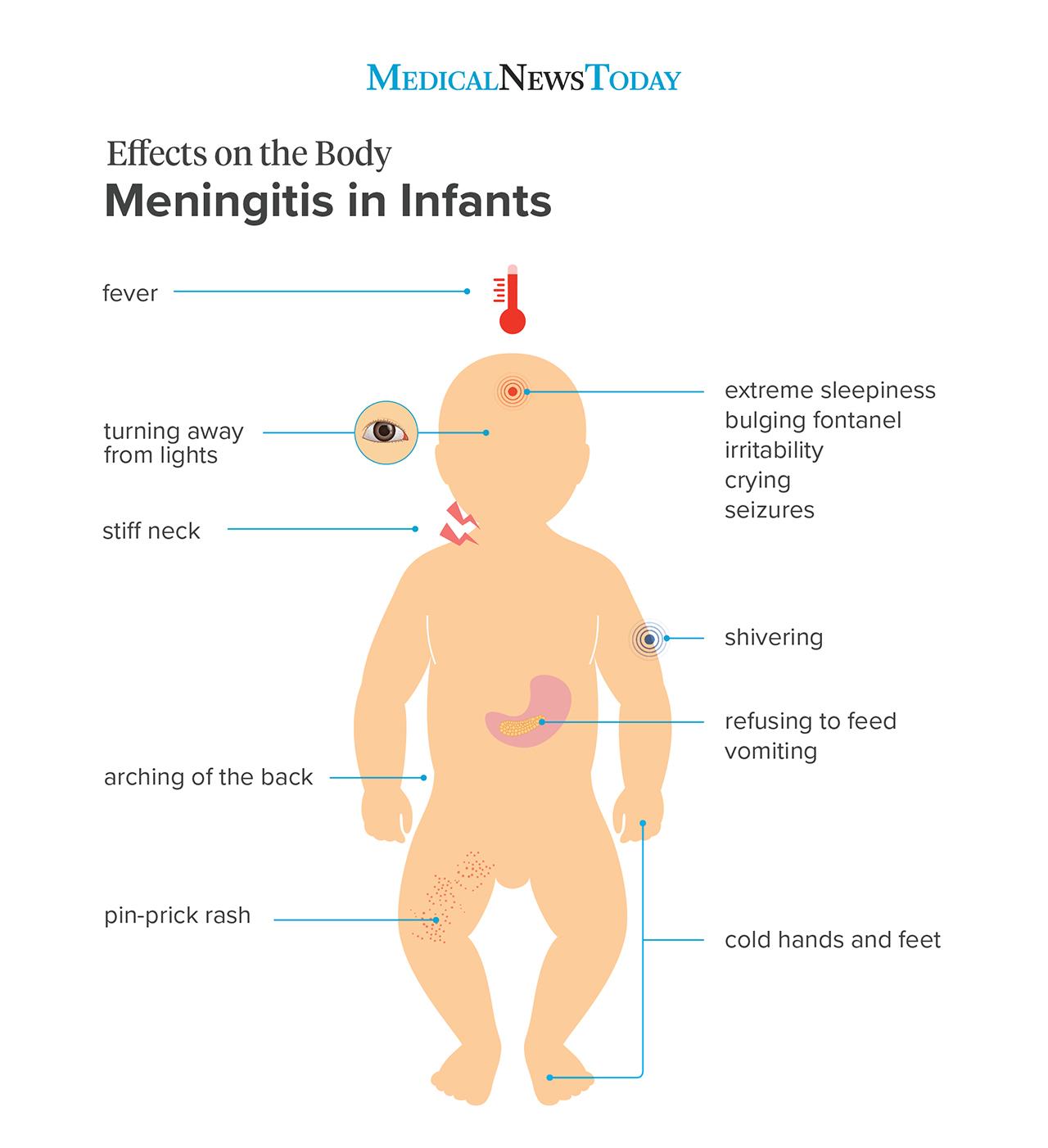
Image credit: Stephen Kelly, 2019
The virtually common causes of meningitis in babies are bacteria and viruses. Bacterial meningitis is typically more dangerous than viral meningitis, though both crave prompt medical care.
Several unlike viruses tin can cause viral meningitis. They include:
- Non-polio enteroviruses. These are the most mutual cause of viral meningitis in the United States. They are oftentimes spread through contact with an infected person's stool, saliva, or secretions from the eyes and nose. Infection with these viruses is common, but most people simply develop a balmy illness.
- Influenza. Flu or the influenza tin can exist especially serious in babies, every bit it may lead to meningitis. It is spread through coughing, sneezing, and shut contact with an infected person.
- Herpes simplex viruses (HSV). These viruses crusade cold sores and genital canker. According to the
World Health Organization (WHO), more than 65 per centum of the world's population has HSV, and many do not know it. A person can spread HSV to a babe through kissing, even when they accept no symptoms. Newborns can contract HSV from their mothers during nascence. - Varicella-zoster virus. This virus causes chickenpox and shingles. It is highly contagious and commonly spreads through breathing, talking, or contact with an infected person's blisters.
- Measles and mumps. These diseases are extremely contagious and are spread through talking, coughing, sneezing, and sharing items, such as cups. Measles and mumps are less common since vaccines were introduced but are yet very serious in babies.
- West Nile virus or other viruses spread by mosquitoes.
Most of these viruses will not cause meningitis in a healthy person. Withal, babies are at a college risk of meningitis and other complications, so protecting them from these illnesses is vital.
Causes of bacterial meningitis
Bacterial meningitis can exist caused by several dissimilar types of leaner. The most common types that infect babies include:
- Group B streptococcus , known as group B strep. This is passed from mother to newborn during labor and childbirth if the mother is infected and not treated.
- Escherichia coli (Eastward. coli), which is besides spread from mother to baby during labor and birth and by eating contaminated food.
- Streptococcus pneumoniae and Haemophilus influenzae type b (Hib), which are commonly spread through coughing and sneezing.
- Listeria monocytogenes , which is spread through contaminated food. A fetus can exist infected with listeria during pregnancy if the mother consumes food contaminated with the bacteria.
- Neisseria meningitidis , which is spread through saliva.
Bacterial meningitis is treated with antibiotics that are typically given intravenously in the hospital through an Iv.
Co-ordinate to the AAP, most babies who receive prompt antibiotic treatment will recover completely. However, about 20 percent may be left with lifelong effects, including hearing issues, learning disabilities, seizures, and paralysis.
Viral meningitis does non respond to antibiotics. It is usually non as serious as bacterial meningitis (except for HSV in newborns), and many babies will recover completely without complications.
However, both types of meningitis require prompt medical attending. Babies may demand extra hydration with IV fluids, hurting relief, monitoring, and rest in order to make a full recovery.
Meningitis can exist spread easily from person to person. Although it cannot be prevented completely, some precautions can significantly reduce the risk of a babe getting it.
Vaccines are key
Babies should receive vaccines equally outlined by the
Although vaccines exercise not prevent all cases of meningitis, they help protect against several types of serious bacterial and viral meningitis. This profoundly reduces the risk of a babe getting the disease.
Hib (Haemophilus influenzae type b) vaccine
Before the Hib vaccine was available, this leaner was the leading cause of bacterial meningitis. Today, infection with Hib has become much less common due to the vaccine.
Hib vaccine is given at 2, 4, and 6 months of age, and once again between 12 and 15 months of age. Hib vaccine is given either lonely or in a combination vaccine.
Pneumococcal vaccine
Pneumococcus leaner can cause meningitis and other serious infections, such every bit pneumonia. The pneumococcal vaccine is typically given at 2, 4, and 6 months of age, followed past a final dose betwixt 12 and fifteen months of age.
Children with certain health atmospheric condition may go an additional dose between 2 and 5 years of age.
Meningococcal vaccine
The most mutual type of meningococcal vaccine is known as the meningococcal conjugate vaccine (MCV4 or
MMR vaccine
The MMR vaccine protects against measles, mumps, and rubella. Before this vaccine became available, mumps was a common crusade of viral meningitis, specially in babies and children. Measles can also cause meningitis.
The MMR vaccine is given at 12 to 15 months of age and again at 4 through six years of historic period.
Newborns have not yet received all their vaccines, and their immune systems have not adult fully. Therefore, information technology is often advised to avert people and places that may expose a baby to higher amounts of germs. Help protect babies from meningitis and other illnesses with these tips:
- People who accept cold sores or who are decumbent to common cold sores should avoid kissing babies.
- Keep babies away from people who are sick or who are coughing, sneezing, or not feeling well.
- Go on the baby away from big crowds of people whenever possible.
- Wash hands earlier preparing nutrient or bottles for a baby.
- Ask others to wash their hands before belongings the baby and to avoid touching the babe's face.
- Significant women should get a group B strep test between 35 and 37 weeks of pregnancy. Mothers who test positive for group B strep should receive antibiotics during labor to forbid spreading the infection to the baby.
- Keep babies indoors during prime mosquito activeness. This is usually from dusk until dawn. If the infant must be outside, apply long sleeves, long pants, and ask a pediatrician most prophylactic mosquito repellants.
Too, do not betrayal babies to cigarette fume, which may increment the risk of getting viral or bacterial illnesses, such equally meningitis.
Meningitis symptoms can come on quickly and apace become serious in babies. For this reason, babies should be given emergency medical care if any symptoms of meningitis appear, or if the baby'due south beliefs is unusual.
Extreme fussiness without obvious cause, a fever, excessive sleepiness, or a rash should exist checked by a md immediately.
Although meningitis can be serious, almost babies will recover from viral or bacterial meningitis with proper medical care.
How to Know if My Baby Has Meningitis
Source: https://www.medicalnewstoday.com/articles/321033
0 Response to "How to Know if My Baby Has Meningitis"
Post a Comment